



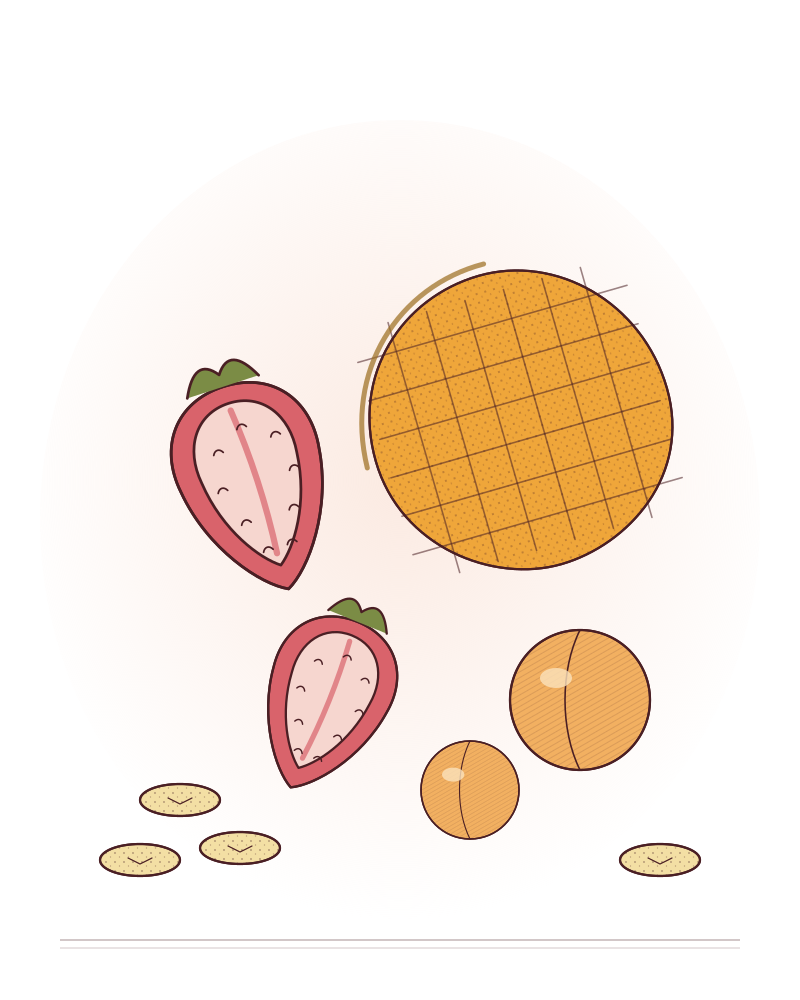

Both processes remove water from fruit so it keeps without refrigeration. They produce very different ingredients, though, and the right choice depends on what you are making.
How each process works
Freeze-drying (lyophilisation) freezes prepared fruit to around −40 °C, then places it under deep vacuum. The ice sublimates — turns directly to vapour — without the fruit ever being heated. The cell structure stays intact, so the fruit keeps its shape, colour and aroma and ends up crisp and very light.
Dehydration dries fruit in moving warm air, usually at 55–70 °C, over several hours. Water evaporates from the surface, the fruit shrinks and the sugars concentrate. The result is dense, chewy and sweet.
| Freeze-dried | Dehydrated | |
|---|---|---|
| Final moisture | 2 – 4 % | 12 – 20 % |
| Water activity | < 0.3 | 0.5 – 0.65 |
| Texture | Crisp, airy, dissolves | Chewy, dense |
| Rehydration | Seconds | Slow, partial |
| Colour & aroma | Close to fresh | Darker, caramelised notes |
| Shelf life (sealed) | 18 – 24 months | ~12 months |
| Cost per kg | Higher | Lower |
Choose freeze-dried when…
- You need crunch: cereals, granola, chocolate, snack packs
- The fruit must rehydrate quickly: smoothies, instant oats, baking mixes
- Colour matters: yoghurt toppings, premium retail
- You want a powder: freeze-dried fruit mills into a free-flowing, vividly coloured powder
Choose dehydrated when…
- You want a chewy snack or trail-mix piece
- The fruit will be baked into a product
- Cost per kilo is the main driver
- You are buying traditional products such as sun-dried apricots or dates
What to put in the specification
For either type, specify the fruit variety (for mango, Chaunsa and Sindhri behave differently), cut size, maximum moisture, water activity for freeze-dried products, whether sulphites are permitted, and the microbiological limits your market requires. For freeze-dried fruit, insist on nitrogen-flushed, high-barrier packaging — it starts absorbing humidity the moment it meets air.
Freeze-dried fruit is light: a 40-foot high-cube container holds only about 4–5 tonnes of bulk cartons. Plan freight per kilo accordingly — or consolidate with denser cargo.
Browse our freeze-dried and dehydrated fruit range — mango, strawberry, apricot, apple, banana, guava and dates.